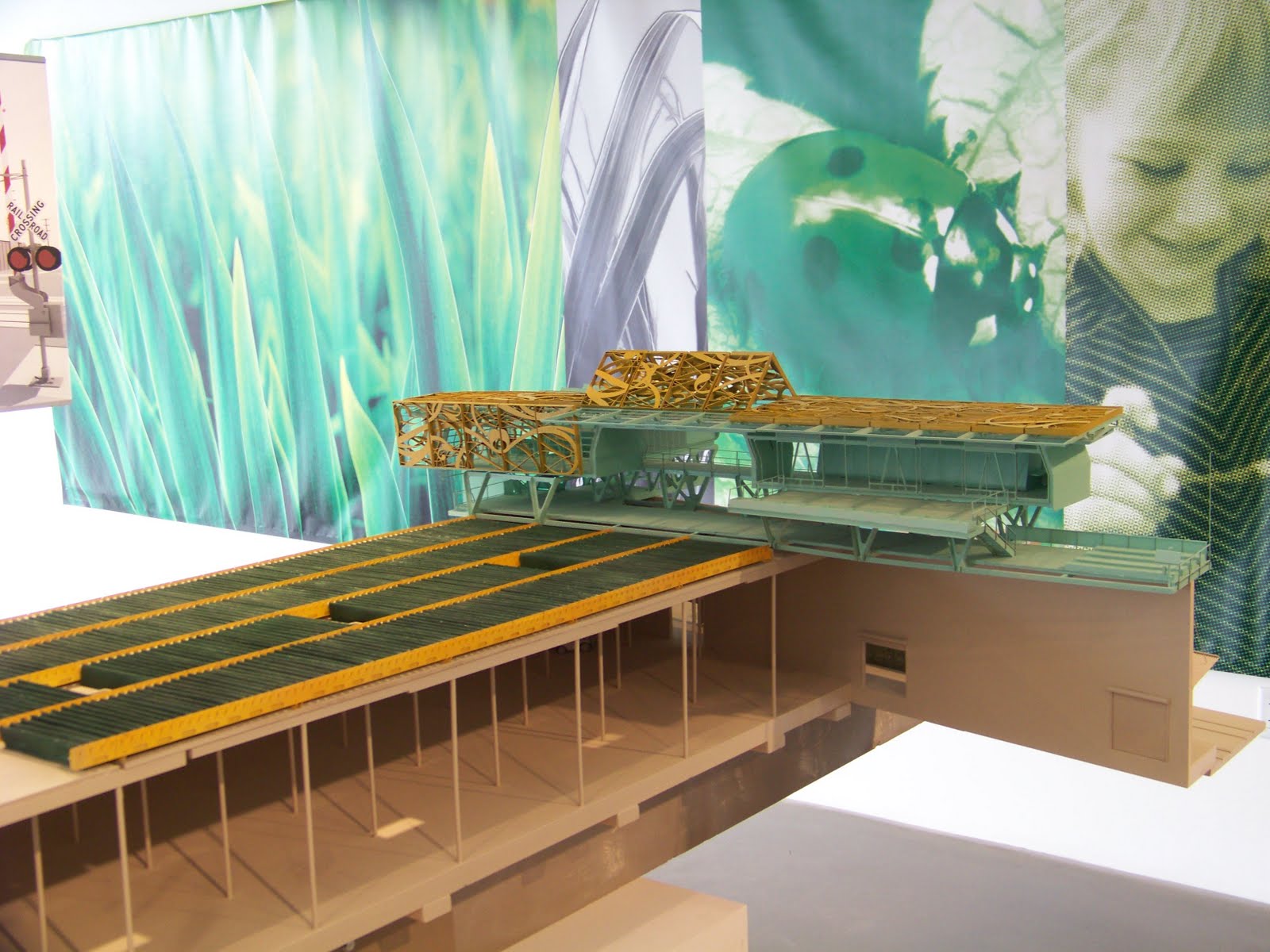
Text and image above taken from A+D Museum of LA
SOUPERgreen
This exhibition presents new architectural work that offers a critical and compelling alternative to the prevailing approaches to environmentally conscious architecture. It specifically challenges the architectural discipline’s inexcusably normative application of technology in response to the environmental crisis, which has to date resulted in work that either approaches the environmental crisis as an engineering problem to be simply “solved” through a banal or invisible technology, or else speciously uses the rhetoric of technological performance in an attempt to justify an otherwise irrelevant formalism. Given the seriousness of the environmental crisis, the complacency of both of these existing approaches is severely problematic.
In contrast, this exhibition features five architectural propositions that explore the way that technology—reviled by many as the source of the environmental problem and revered by others as its potential solution—can promote and enhance a far more constructive engagement between architecture and the environment. This “souped up” approach to green architecture is achieved by leveraging the expressive potential of a meaner, greener technology in order to produce architecture that is not only environmentally responsible by quantifiable measures, but which also critically and positively promotes more expressive, exuberant, rad, boss, and totally stoked green experiences.
This exhibition features newly completed projects by Doug Jackson, Wes Jones, Aryan Omar, Steven Purvis, and Randolph Ruiz—five architects and designers who have each produced widely publicized and celebrated work renowned for its emphasis on the expressive and transformative potential of technology. Collectively this group represents a vision that is both unique and uniquely consistent within the discipline of architecture, but one that is also rich and nuanced, informed by a broad range of experience and expertise:
Doug Jackson is the principal of the Doug Jackson Design Office and is also a professor at the Cal Poly College of Architecture and Environmental Design in San Luis Obispo; Wes Jones is the principal of Jones, Partners: Architecture and a professor at the Southern California Institute of Architecture; Aryan Omar is a designer with Richard Meier & Partners Architects; Steven Purvis is the principal of APLSD Design; and Randolph Ruiz is the principal of AAA Architecture and a professor at the California College of the Arts.
The work that these five have produced for this exhibition capitalizes on their collective expertise, as well as their proven unwillingness to play it safe. While other architects have so far elected to only timidly engage the environmental crisis, the work in this show demonstrates the superlative approach to greenness that architecture should take, and leaves all previous efforts at green architecture in the dust.
The following are a selection of photographs that I took of the above mentioned projects during my trip to the A+D Museum of LA.